






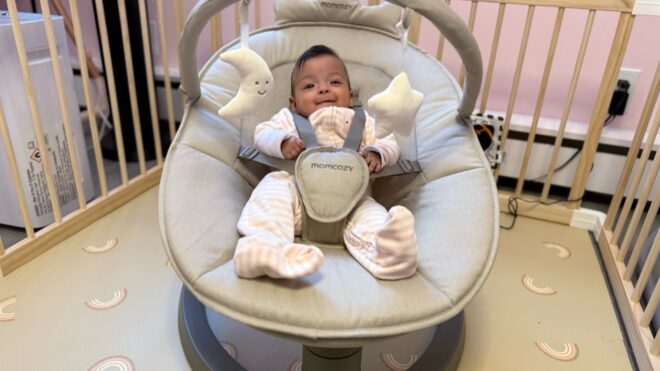
Septo-Optic Dysplasia (SOD), also known as de Morsier’s syndrome, is a rare disorder characterized by visual impairment, pituitary deficiencies, and specific brain abnormalities (absence of the septum pellucidum and corpus callosum). SOD may be apparent in early infancy, during childhood, or, in some cases, as late as adolescence. In some cases, individuals with SOD will have brain abnormalities that affect just the structure of the brain, while others will have abnormalities that affect the function of the brain. Typically, however, a child will have both types, resulting in problems ranging from mild to very severe.
The cause of SOD is unknown, however, there is evidence for both genetic and acquired cases. While there have been reports of SOD occurring in two children from the same family, it is typically not the case. Most cases are sporadic (or random) in nature. In fact, some researchers believe that SOD is the result of a lack of blood supply or oxygen to the front part of the brain during a critical stage of fetal development.
Features and Characteristics
The following features have been identified in some children with SOD. Not all of these characteristics will be present in every child:
- Optic nerve hypoplasia (underdevelopment of optic nerves), resulting in mild to severe vision impairment
- Nystagmus (involuntary movement of the eyes)
- Pupil dilation in response to light
- Inward and outward deviation of the eyes
- Absent septum pellucidum
- Absent corpus callosum
- Hypopituitarism (diminished activity of the pituitary gland), resulting in various hormonal problems
- Hypotonia (low tone)
- Seizures
- Intellectual impairment (varies in severity from learning disabilities to mental retardation)
- Psychomotor retardation (delays in skills that require the coordination of mental and muscular activity)
- Jaundice at birth
- Sensory integration dysfunction
Pituitary Deficiencies
The pituitary gland is found at the base of the brain. It plays an important role in that it makes hormones and directs other glands in the body to make hormones. These hormones are required for growth, energy control (metabolism), and sexual development. Individuals with SOD often have problems with their pituitary gland and as a result, have difficulty making these much needed hormones (known as hypopituitarism).
The following hormones may be affected when there is a problem with the pituitary gland:
Growth hormone - When there is a lack of growth hormones, a child will grow slower than normal. Without treatment, a child will be shorter than expected when growth is complete.
ACTH - This hormone, made in the pituitary gland, signals the adrenal gland to make cortisol, which is needed to help the body create energy, control blood sugar, and allow for proper heart and lung function.
Thyroid hormone - This hormone is made by the thyroid gland in the neck. With a poorly functioning pituitary gland, the thyroid gland does not get the proper signal to make this hormone. A lack of thyroid hormone can result in poor growth, slowing of mental and muscle function, weight gain, irregular menstrual cycle, hair loss, hoarse voice, brittle nails, and coarse skin.
Anti-diuretic hormone (ADH) - This hormone is produced by the pituitary gland and is responsible for keeping water in the body by controlling the amount of urine that is created. Without enough ADH, a person cannot control the amount of urine and may lose too much water from the body, resulting in dehydration. Dehydration can lead to serious problems. When a child does not make enough ADH, he or she is referred to as having diabetes insipidus.
Sex hormones - The pituitary gland produces two hormones that are involved in sexual development. During teenage years, these hormones are responsible for sexual maturation (puberty). They also control a woman’s menstrual cycle. Without these hormones, a child’s sexual development is delayed, a girl’s menstrual cycle is irregular, and pregnancy becomes difficult.
Hormone replacement therapy is available for all of the above deficiencies, either by mouth or injection.
Vision Impairment
Optic nerve hypoplasia (ONH) is a condition where the optic nerves are small and underdeveloped. The typical person has over 1 million nerve fibers from each eye to the brain. Individuals with ONH, however, have far fewer connections. The fewer connections between the eye and the brain, the worse the vision. The severity of the visual impairment for individuals with ONH can range from near normal vision to complete blindness.
In addition to ONH, some children with SOD have nystagmus, which are unusual eye movements. The eyes seem to move around with no real pattern or purpose. This occurs because the eyes are not able to focus well enough to hold still.
Diagnosis
A diagnosis of SOD can be made based on specific findings. A child suspected of having SOD should see a team of specialists to confirm the diagnosis. An ophthalmologist can diagnose ONH by looking into the eyes with an ophthalmoscope. A neurologist will determine, either by MRI or CT-scan, whether the septum pellucidum (and in some cases, the corpus callosum) is absent. And, an endocrinologist can determine whether there are pituitary deficiencies that will result in hormonal problems. If there are positive findings in these three areas, the child may then qualify for an SOD diagnosis.
Treatment
There is no cure for SOD, therefore, treatment is symptomatic. As mentioned earlier, hormone deficiencies can be treated with hormone replacement therapy. Vision therapy and services will likely be required, and physical and occupational therapies may be helpful for mobility training. What’s important to note is that if SOD is diagnosed early and the hormone deficiencies are identified, many of the symptoms seen in children with SOD may be prevented altogether.
What to Expect
The prognosis for individuals with SOD varies according to the type and severity of symptoms. While a neurologist can determine at an early age if there are brain abnormalities, he or she cannot determine whether the child will have problems with brain function. In children less than 3-4 years of age, it is often difficult to predict future brain function such as speech, intelligence, or learning.
It is often difficult to assess the overall development of a child with poor vision. Therefore, children with SOD must be tested, taught, and treated by individuals who have experience with children with poor vision. With appropriate intervention, most children with SOD can live full, productive lives.
Personal Stories
We discovered Erin had a brain malformation at her 20 week sonogram. At first, our doctors didn't think she would survive (that's a whole other story, though). Part of her cerebellum was missing and misshapen. After we went to several specialists who were familiar with her situation, we expected her to have delays with walking and talking. Once she was born, we began to realize that something more was going on. Her eyes rolled constantly and she wasn't very alert or interested in things around her.
Finally, after undergoing genetic testing when she was 13 months old, it was discovered that she has diabetes insipidus (DI) as well as sensory integration dysfunction. Her official diagnosis is SOD. Just last week, we discovered that she has a growth hormone deficiency.
Increasing her fluids (DI causes dehydration) gave her a whole new personality. Before this, she was sleepy and constantly napped throughout the day. She actually began laughing and interacting with us overnight! Currently, she can sit up well and has begun rolling around a bit. Her eyes hardly ever roll anymore (unless she's tired) and she can stand very well when I hold her hands to help her balance. The most exciting thing that's happened recently is that she'll track a flashlight and some of her toys. She's always had light perception, but she would never follow it. Now, we can shine lights on different objects and she'll reach out to explore them.
My favorite activity to help with her vision is to take her into a dark room and read her a story by flashlight. She really looks at the book and seems to see the pictures. Reading is so important and my biggest hope is that one day she'll enjoy it and love it as much as I do. We're working with occupational therapists, physical therapists, vision teachers, speech (oral motor) therapists and a home teacher.
The main advice that I have for other parents is to dig and dig until you find the answer to a problem. Too many times, I have gotten unsure or vague answers to my questions and nine times out of ten, there is a solution that we find by searching deeper. If one of her doctors is only focused on negatives, I find another doctor. It's so important for professionals to see these kids as children rather than lab specimens. It's also important for them to tell me the straight answers so we know what we're dealing with. We have an excellent medical and therapy team now and I feel very fortunate to know them.
My favorite thing about Erin is her sense of humor and happy disposition. She's the sweetest little girl and we're so lucky to have her. - Marilyn D. Magner
Resources
If you are interested in meeting other parents who have a child with SOD, please click here for directions on how to subscribe to the discussion list: http://www.focusfamilies.org/focus/support.asp.
For more information on SOD, please see the following references:
- The National Institute of Neurological Disorders and Stroke http://www.ninds.nih.gov/health_and_medical/disorders/septo-optic.htm
- The MAGIC Foundation http://www.magicfoundation.org/sod.html
- The University of Medicine and Dentistry of New Jersey http://www2.umdnj.edu/forumweb/SOD.htm
- The National Organization for Rare Disorders http://www.stepstn.com/cgi-win/nord.exe?proc=Redirect&type=rdb_sum&id=496.htm
- Diabetes Insipidus Foundation http://diabetesinsipidus.maxinter.net/septo.htm
- FOCUS http://www.focusfamilies.org/focus
- Online Mendelian Inheritance in Man http://www3.ncbi.nlm.nih.gov/htbin-post/Omim/dispmim?182230


- heidi1439
on Nov. 2, 2009 at 12:03 AM