






Overview
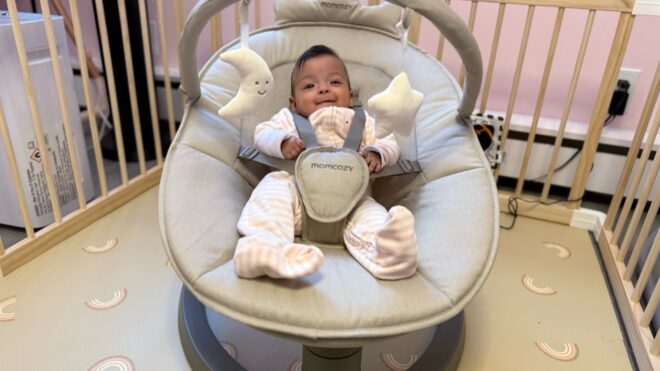
The combination of your 2-month-old's environment and inherited temperament is forming her particular personality. By now, you can recognize her language and know when she's hungry, in pain, signaling for attention, tired, or just bored. You will become more sensitive to her needs and learn how best to reassure her.
Sensory stimulation is becoming more important to your baby. She wants you to talk to her, play with her, and show her new things. She also loves it when you interact with her--especially when you get silly. She will be fascinated when you shake your head, clap your hands, or stick your tongue out at her. She'll definitely protest if she's left alone for long.
Sometime in the next month or so, your baby will start to "converse." The sound of voices or music will not only quiet her when she's fussy, but also prompt her to reply in the form of gurgles and coos. She'll happily maintain a conversation of oohs and aahs for as long as 20 minutes.
Until now, your baby usually held her hands in a fist. This month, her hands will become more loosely clenched and eventually totally unflexed. She will stare at her hands and practice finger movements--and even register surprise when her hands reappear after having left her field of vision.
Your baby may begin to maintain a semisitting position with help. When she's lying on her belly, she can lift her chest up a bit. When you stand her up, she may hold her head up for a short time. She's also capable of raising her arms from her sides and bringing both hands together at the center of her body.
This is when you should begin babyproofing your home. Put your valuables, cleaning products, and plants out of reach. Anything your baby can reach should be unbreakable and nontoxic. Be aware of small objects that she could find and choke on.
By the end of the month, your baby may be sleeping as much as 10 hours at night, though she may sometimes wake for short stretches. She may fuss, but she'll gradually learn to stop waking as long as you don't rush in every time she wakes up.
If your baby has trouble getting to sleep when you put her to bed, she may not have been wide-awake enough during the day. Don't leave her in her crib too long while she is awake. On the other hand, she may not sleep well if she's had too much stimulation, particularly right before bedtime. Consider beginning a bedtime wind-down ritual that includes a small feeding, a brand-new diaper, and some cuddling.


- mom2Hayleigh
on Jul. 30, 2009 at 1:34 PM