





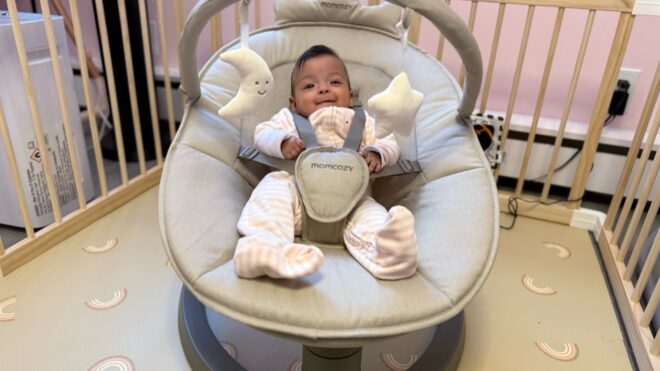
Facts about Down Syndrome

Down syndrome has for too long been shrouded in fear and darkness; the facts are far better than the myths. Here are the facts.

Down syndrome is the most common chromosomal abnormality, occurring in approximately 1 in 900 births. More than 350,000 individuals with Down syndrome have an extra chromosome and thus have 47 chromosomes in every cell instead of 46. To date, medical researchers have not determined the cause. What is known is that Down syndrome occurs among all races, ethnic groups, nationalities, and socioeconomic classes. It also occurs evenly in boys and girls. It is important to realize that nothing that the mother or father does - or fails to do - before or during pregnancy, can cause Down syndrome.

Because chromosomes and the genetic information they carry determine how we grow and develop the presence of an extra chromosome does affect a child in a number of ways. The word "syndrome" means that many different characteristics are seen together as a package. Some of these physical characteristics may include low muscle tone, eyes that appear to slant upward, a flat nasal bridge, extra skin folds at the back of the neck, relatively small nose and ears, a larger gap between the first and second toes, and a single horizontal crease on either palm. While these characteristics are more common in an individual with Down syndrome, they are features that can be seen in anyone in the general population.

Since people with Down syndrome have the extra chromosome, they have features that cause them to resemble other individuals with Down syndrome. However, because there are 46 completely normal chromosomes, individuals with Down syndrome will also resemble their parents, brothers and sisters, and will possess their own unique personality.

Development
Current research indicates that the majority of people with Down syndrome have mild to moderate developmental delays. There is NO correlation between physical characteristics and cognitive abilities. Today, less than five percent of individuals with Down syndrome have severe to profound intellectual disabilities; the majority have only a mild to moderate intellectual disability. An intellectual disability means that a person does not just learn more slowly, but that she or he actually learns differently and develops different strategies and mechanisms for learning.

It is impossible, either prior to birth or early in life, to determine any person's future strengths or weaknesses. Individuals with Down syndrome are lifelong learners and acquire new skills and talents when offered a variety of life experiences and opportunities. Just like their peers, they attend school, develop friendships, maintain jobs, participate in important personal decisions and make positive contributions to the community. People with Down syndrome are more like their non-disabled peers than they are different and they deserve the same opportunities.
 
Health Issues
Individuals with Down syndrome may have a greater incidence of health certain complications than that of the average person. Ongoing medical assessment with early detection and treatment are important.

Click below and be blessed:

A SPECIAL ANGEL ("You're the greatest gift I can give")


             Welcoming Babies with Down Syndrome 


If you are welcoming a new baby with Down Syndrome into your family, you probably have many questions and concerns, as do your extended family, friends, and neighbors. We have written this information keeping in mind our own diverse experiences when our children were born with Down Syndrome.

Congratulations on the birth of your baby. We wish you all the best.

Down Syndrome is a chromosomal anomaly that occurs in 1.3 per 1000 births. For some unexplained reason, an error in cell development results in 47 chromosomes rather than the usual 46. The extra gene material slightly changes the orderly development of the body and brain. About 5000 babies with Down Syndrome are born in the United States every year. The national population of individuals with Down Syndrome is estimated to be 250,000.

About 80% of babies with Down Syndrome are born to mothers under the age of 35. About 1 in 400 babies born to women over 35 have Down Syndrome.

People with Down Syndrome are more like typically developing individuals than they are different. There is great diversity within the population in terms of personality, learning styles, intelligence, appearance, compliance, humor, compassion, congeniality, and attitude. Favorite pastimes vary from person to person and range from reading and gardening to baseball and music, and beyond.

Children with Down Syndrome benefit from the same care, attention, and inclusion in community life that help every child grow. As with all children, quality education in neighborhood schools and preschools or at home is important to provide the child with Down Syndrome the opportunities that are needed to develop strong academic skills.

On standard IQ tests, our sons and daughters with Down Syndrome most often score in the mild to moderate range of mental retardation. These tests do not measure many important areas of intelligence, and you will often be surprised by the memory, insight, creativity, and cleverness of your child. The high rate of learning disabilities in students with Down Syndrome sometime mask a range of abilities and talents.

Although babies and children with Down Syndrome are early customers for extensive health evaluations, infant stimulation, physical therapy, communication enhancement, developmental evaluations, and other professional intervention, it is important to keep in mind that every child deserves to be surrounded by people who love, respect and admire all children.

Individuals with Down Syndrome may be identified by numerous physical attributes which may or may not present themselves in any one individual. Some characteristics are the beautiful almond shaped eyes, with striking Brushfield spots on the irises, a single palmar crease on one or both hands, small features, and exceptional social intelligence. Individuals with DS have a high rate of congenital heart defects (35 to 50%) and should have an echocardiogram within the first two months of life. National organizations provide medical checklists for individuals with DS that you may wish to pass on to your child’s physician.

There are three major types of Down Syndrome. Your baby is most likely to have Trisomy 21, meaning presence of extra genetic material on the 21st pair of chromosomes resulting from an anomaly in cell division during development of the egg or sperm or during fertilization. About 95% of people with DS have Trisomy 21.

It is estimated that 3% to 5% have Translocation, where the extra chromosome 21 broke off and became attached to another chromosome, and 1% to 3% have Mosaicism, where only some cells have Trisomy 21.

Your child will have more opportunities than a child born with Down Syndrome five years ago. As young people with DS show what they can do with the support of their communities as they integrate mainstream programs, more doors open for others. We have seen a TV series starring a talented actor and actress with DS enlighten the general public about the potential of all our children.

Two young men have authored a book, Count Us In, Growing Up with Down Syndrome, and impressed audiences across the country at book signings and on talk shows. A fast paced mystery, Honor Thy Son, by Lou Shaw, features two characters with Down Syndrome who are faithfully portrayed as multi-dimensional young adults. A young man with Down Syndrome was a winner of the Best Actor honor at the 1996 Cannes Film Festival.

Thousands of young people with Down Syndrome across the country are quietly going on with their lives without fame or fanfare and transforming their communities by just being there. They have dreams and the determination to reach their goals. They learn in regular classrooms in their neighborhood schools with the children who will one day be their coworkers, neighbors and adult friends. Young adults hold diverse and meaningful jobs, maintain their own households, and make significant contributions to their communities every day.

Allow your family, friends and neighbors some time to learn about Down Syndrome, reminding them if necessary that DS is just a small part of who your child is and will become. It is a small part of your child’s genetic makeup. Staying integrated in your mainstream community is important to your child’s development and your peace of mind.

Try to get some rest. You are allowed to feel however you feel, and so are others who love you and your baby. Childbirth is hard work; many of your emotions stem from a new life coming into your family. You deserve congratulations and wonderful gifts. Have the good cooks among your family and friends bring over their best meals. Take time to welcome and enjoy your baby. They grow up fast.

National organizations will send free, accurate information about Down Syndrome to you and other family members. They have yearly conferences, newsletters, and lists of local parent groups who you may wish to contact for local resources and information.

Click below to be blessed:

                           Baby's Choice

            Inclusive Education Culture of Down Syndrome


Children with Down syndrome may share more similarities with their mainstream classmates than there are differences due to individual challenges. One of the greater differences that students with Down syndrome experience is that they are tested relentlessly on tasks that are the most difficult for them.

To get some understanding of the culture of Down syndrome, try this simple test several times each day for a week. Sit at your desk, lift your right foot, and make clockwise circles with it. While doing this, draw the number six in the air with your right hand. Start over any time your right foot fails to make a clockwise circle while your right hand is drawing the number six.

Children with Down syndrome are often tested, and pass a task only if they are able to perform it successfully three times, often within a set time limit for each attempt.

Imagine successfully completing a task on a test but not getting credit for it because it took you a little longer than was allowed. This task could be written into your IEP, the goal being that you would attempt it repeatedly until you completed it in slightly less time than it actually takes you to do it comfortably or well.

Next, imagine that you are working on this goal while your peers are taking a coffee break, doing something very similar to this task but taking their own sweet time to do it. Especially in primary grades, a student may work one on one with a therapist doing a very similar activity to what their mainstream peers are doing with their teacher, without the benefits of the classroom atmosphere, peer modeling or demonstration of cooperative social skills. These variations contribute just a small part to the culture of Down syndrome.

Another challenge in the culture of Down Syndrome is disturbed continuity. The student with Down syndrome may be removed from the mainstream classroom in the middle of one activity, and returned to class in the middle of another activity. Even those who do not already have difficulties with transitions might become disoriented or disgruntled. Frequently, behavior communicates the frustration and confusion caused by interruptions in continuity.

Teachers caught on the front lines with IEPs sometimes do not feel they have the same flexibility to give a student with Down syndrome opportunities for a wider range of learning, and novel or natural supports for skill building, academic achievement, and social interaction. They may not be in a position to advocate for a child in the same way parents do, but often have excellent ideas about how to make classroom time more constructive and enjoyable.

There are other challenges. When a student with Down syndrome participates in a mainstream classroom with an IEP created for a special education classroom, curriculum adaptations may focus on what is most difficult for that child, rather than offering a wide variety of skills that he or she may find relatively easy, or interesting enough to be worth the extra effort required. Participating in and following mainstream curriculum often gives a student with Down syndrome opportunities to experience success in unexpected areas.

Sometimes this is achieved purely through peer modeling. Students with Down syndrome whose professional evaluations suggest cannot follow three step directions are often highly enough motivated to learn twice that many when the end result is a vending machine treat or bottle of soda pop. Those who balk at walking along a balance beam in physical therapy may spend an entire recess period 'walking curbs' with mainstream classmates.

Children who have Down syndrome may more readily learn physical, social and academic skills sitting alongside their mainstream peers, picking up subtle cues from them and observing classmates' responses to a teacher's instructions or encouragement. No matter how carefully a physical therapist may teach a student the rules of tether ball, it's the mainstream peer on the playground who is most likely to advise a friend to just let the ball go by the first time around.

Especially in elementary school, children express themselves through behavior when they do not have the opportunity to communicate through words. Those who have communication delays or articulation difficulties may find it far less frustrating to be among mainstream peers who have the same questions or misunderstandings that the student with Down syndrome may not yet be able to express clearly.

Peers often show great talent for interpreting language that eludes adults. Occasionally a child with a communication difficulty just prefers what a friend has said to their own actual remark. Other times, a classmate's perspective may take the sting out of the worst of a difficult situation.

Teachers who are sensitive to the talents and abilities of each student in the classroom often add those assets to her own to give children a sense of achievement and purpose. Children with Down syndrome can also be good friends and advisors. Giving every child a turn in simple classroom activities builds a sense of community and belonging.

Children with Down syndrome often blossom when they share in the high expectations as well as the small accommodations good teachers make for all their students. Cooperative learning and positive behavioral support benefit mainstream students who learn how important a helping hand can be to give and to receive throughout their educational and work careers.

Growing up in an inclusive classroom teaches every student that they have a place in the world, no matter what their aptitudes or challenges may be. Down syndrome may not be the greatest challenge present in a mainstream classroom, and the way we accept and support a student with Down syndrome may demonstrate more than we could otherwise teach any student about the value of diversity.
 
Click Below and be blessed:

A LIFE WORTH LIVING (As long as I am alive I have hope there is a chance, there is a dream to be fulfilled)

                         The Creed Of Babies with Down Syndome


My face might be different

But my feelings the same

I laugh and I cry

And I take pride in my gains

I was sent here among you

To teach you to love

As god in the heavens

Looks down from above

To him I'm no different

His love knows no bounds

It's those here among you

In cities and towns

That judge me by standards

That man has imparted

But this family I've chosen

Will help me get started

For I'm one of the children

So special and few

That came here to learn

The same lessons as you

That love is acceptance

It must come from the heart

We all have the same purpose

Though not the same start

The Lord gave me life

To live and embrace

And I'll do as you do

But at my own pace.

 We are Alike, the Same...

                                  Click above and be blessed


Add A Comment

Comments:

spark...
Oct. 1, 2008 at 11:44 AM

LOVE IT!  Voted popular!way to go

Message Friend Invite

adams...
Oct. 1, 2008 at 12:28 PM

Fantastic !! Great Post.

Speading Awareness Awesome!

Sweet love it!

Message Friend Invite

Mom2A...
Oct. 1, 2008 at 12:37 PM

Also,, if you are a blogger, there is Get it Down: 31 for 21. Click here for a list of participating blogs and to submit your blog also

Message Friend Invite

Nanet...
Oct. 1, 2008 at 3:34 PM

Thanks for all you do on here to spread awareness of this! I sooo appreciate you! : )

Message Friend Invite

kalista
Oct. 1, 2008 at 4:20 PM

Thanks for posting this!!!

Message Friend Invite

Ryans...
Oct. 1, 2008 at 4:53 PM

Thank you for spreading DS awareness. I hope Cafemom would acknowledge this along with Breast Cancer.

Message Friend Invite

mamadita
Oct. 1, 2008 at 6:40 PM

MANY, MANY THANKS!

Message Friend Invite

auror...
Oct. 1, 2008 at 7:54 PM Thank you for the information, voted popular!

Message Friend Invite

Mom_o...
Oct. 1, 2008 at 8:30 PM Lots of info, Gloria... I hope it is exactly what some momma's need to see! Thanks for sharing...and yep, voted it popular!

Message Friend Invite

LYNDELOU
Oct. 1, 2008 at 8:53 PM

A meeting was held quite far from earth, "It's time again for another birth ". Said the angels to the Lord above ,  "This special child will need much love. "  His / Her progress may seem very slow , accomplishments he / she may not show , And he / she will require extra care from the folks he / she meets way down there.

He / she may not run , or laugh , or play ; his / her thoughts may seem quite far away. In many ways he / she won't adapt ; and he / she will be known as handicapped.....

So let's be careful where he/ she's sent , we want his / her life to be content.

Please Lord, find the people who will do a special job for you.

They will not realize right away , the leading role they're asked to play ; but with this child sent from above , come stronger faith and richer love.

And soon they'll know the privilege given , in caring  for their gift from Heaven ; their precious child , so meek , so mild :

Is Heaven's Very Special Child.

I totally agree Mom's that ALL awareness's need to be recognized !!!

Thank you for reminding US ALL that their are more then ONE cause that needs love and FULL attention..

My prayers are with the families of these special children...♥ ♥ ♥ ♥ ♥ ♥

Message Friend Invite

Want to leave a comment and join the discussion?

Sign up for CafeMom!

Already a member? Click here to log in

Advertisement