



OUR FOOD, OUR FUTURE

BY JOHN ROBBINS

[Printer-friendly version]

This is the award-winning article John Robbins originally wrote for the best-selling 2001 book Imagine: What America Could Be in the 21st Century.

It's the year 2030. A meal is served. It was quick to prepare, just a few seconds in the food enhancer (actually an irradiation chamber based upon the old microwave ovens) was all it took. Of course, there was the time that Mom spent driving, parking, reading labels, and standing in line in fluorescent-lit grocery stores listening to canned music, then driving again, getting stuck in traffic, opening packages, and disposing of the trash. But she hardly noticed. She also didn't notice the thousands of "Buy Now" messages to which she was exposed nor the chemical-laden air that she breathed. Her mind was elsewhere, spinning a mile a minute, but the behavior- and mood-altering drugs she takes keep her from being too unhappy.

The food is flavored and enhanced by an array of artificial chemicals, produced in factories located in those parts of the world where labor costs are lowest and environmental regulations are most lax. The foodstuffs involved were grown in assembly line conditions on monocrop and factory farms in nations where there are no limits whatsoever on the use of toxic pesticides or hormones, and they have been so heavily refined and processed that it is impossible to tell from what plant or animal they might have originated. All seeds and food animals, like most of the people who work in the fields and animal factories, are now bio-safe, the term used for seeds, animals, and people that have been genetically engineered to tolerate huge doses of herbicides, insecticides, and other toxic chemicals.

Once in a while, Mom wonders what's in these foods and how much fat or salt or sugar they might contain and whether the many chemicals she and her family are eating might cause cancer. But no one has seemed to care much about such things ever since food labeling of ingredients was banned as an unfair barrier to trade.

The televisions are on throughout the meal. Advertisements no longer exist since commercial messages are now fully incorporated into the programs. Each person is tuned to his or her own channel. Mom is trying to create a semblance of family life and sometimes thinks perhaps they should once in a while watch the same TV show together, but it never works.

And it's an impossible struggle to get anyone to help with the dishes. Maybe they should just eat out all the time. Identical McDonald's restaurants are now found in every neighborhood. The food is cheap, especially if you don't count the cost of the gas to drive there or the health consequences of eating what they sell. Occasionally, a TV show will say something about the rainforests that are now almost gone or the ever-worsening climate conditions, but with everyone who can afford to living in totally controlled conditions, it's easy not to think about it much.

Eventually, Mom gives up trying, gives in to social pressure, and her family becomes even more normal. If anyone gets hungry, they just fend for themselves, grabbing whatever is around and convenient, to appease whatever sensation they are experiencing. Stores are full of colorfully packaged, artificially flavored ready-to-eat items with indefinite shelf lives. It takes only the push of a single button to order, via the Internet, the food pellets, injections, and implants that increasingly take the place of meals.

Scientists are busy looking for a drug to handle the eating disorders, cravings, and addictions that are so common now. The children are obese, the teenagers are fixated on body-image obsessions, and people of all ages are walled off in their own worlds.

"It could be worse," Mom tells herself, remembering for a moment the billions of children in the world who have nothing to eat at all. But human hunger isn't talked about much anymore, with everyone taking happiness medications. And people have been extremely reluctant to discuss such things ever since the National Cattlemen's Beef Association sued a prominent author for food disparagement. She had dared to expose the fact that if Americans ate 10 percent less meat, enough grain would become available to feed 60 million people.

A Different Scenario

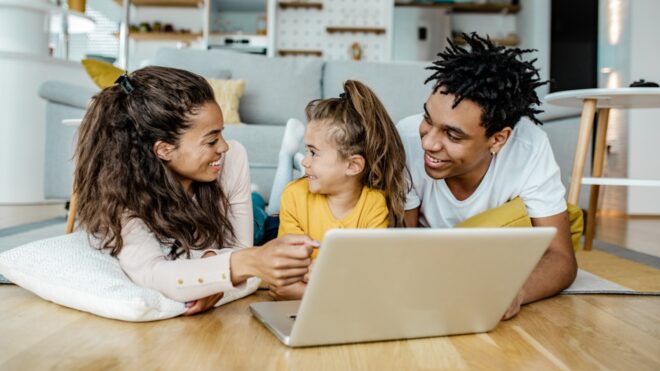
:It's the year 2030. A meal is served. The old wooden table has been in the family for several generations. Sturdy and simple, it carries something of meaning from all the life it has witnessed and made possible. Around it sit people who have love and respect for each other. They communicate freely and easily. Each person is honored for the unique gifts and talents he brings. Each person is supported to fully express her powers. People eat in comfort and safety, knowing that, thanks to the changes that have taken place, no one anywhere, anymore, goes hungry.

The food this family eats, like the food now eaten by most families in the nation, is wholesome and natural. Much of it comes from land nearby. Throughout the land, families and communities of every race and ethnic background gather together to enjoy healthy foods that represent their unique cultural heritage. Families gather around steaming bowls of fresh soup and meals made from delicious natural ingredients. Large and colorful salads contain fresh leaves, not only of lettuce and other vegetables picked from family and local gardens but also of several wild plants that grow nearby. Children are always excited to find these plants, as they are to find the wild edible mushrooms that are frequently served with rice and a delicious sauce of seeds and homemade vinegar. Grandma made the vinegar last year from apples that had fallen fully ripe from the tree.

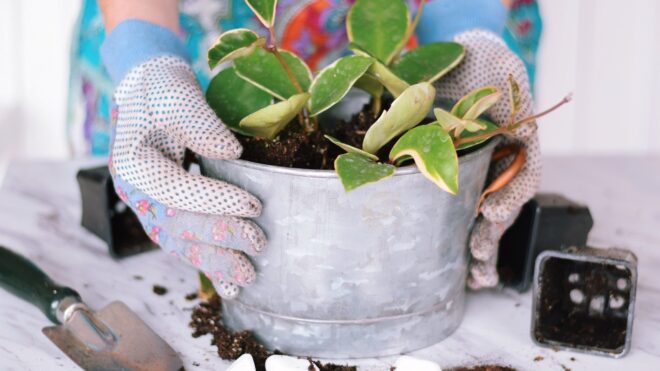
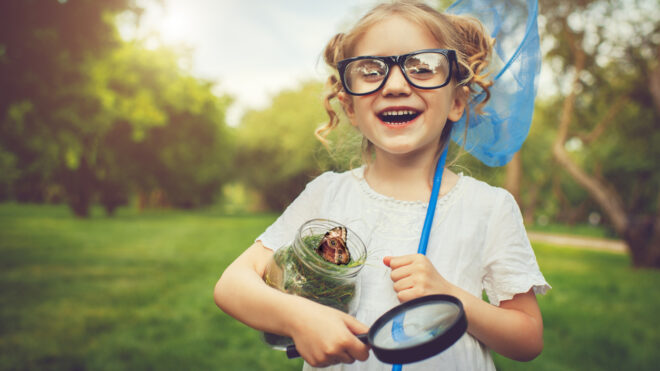
Children from different families play together and help in the family and community gardens, where they learn to cooperate with youngsters from different backgrounds. Small fingers in every hue-black, brown, yellow, white, and red-play around in the fertile soil, pulling weeds, playing with water and mud and worms. Worms abound in the deep, rich soil, for it is teeming with organic life and a vast mix of nutrients for the plants. For the children, it's a game to harvest vegetables and carry them to the kitchen, where adults wash and chop. Some of the vegetables they planted themselves.

As the children plant seeds, then watch the seeds turn into small seedlings that will in turn grow into healthy plants, they know that they, too, are part of the earth community and they, too, can grow strong and steady into people who can contribute to the lives of others. Understanding that they, too, have roots and stems, leaves and seeds, they relish the harmonious development of all their powers and potentials. Seeing how plants depend upon the health of the soil, they learn the importance of caring for the environment we all share.

Most families shop at the local farmers' market, where community farmers gather to sell direct to consumers. They don't have to charge as much when there aren't huge distribution, transportation, and marketing costs to pay, and when there aren't corporate entities taking a share of everything. At the market, people meet the people who grew their food and learn what's in season and what's ripe today. The market is a pageant, extraordinarily alive with the vivid colors of countless varieties of fruits, vegetables, seeds, beans, nuts, and grains. Much of the food is grown organically. People come together here to talk about local issues and topics of importance, and rally around those concerns and people needing support.

At home, in a kitchen, a mother and daughter are shelling peas. Other family members are peacefully sorting beans and making a soup. Everyone in the house is smelling the fragrances of the simmering soup, savoring the sensual pleasures and the creativity of it all.

People still go out to eat, but it is usually to sample new ways of preparing wholesome foods and a variety of ethnic cuisines, not because they have no place else to eat and not because they don't have time to prepare a decent meal. For most families, the time spent preparing meals is sweet, as is the time afterward, cleaning up together. There is chatting, laughing, and joking. Even the teenagers love it because here there is time for them to talk about what is going on in their lives and to be heard.

When the teenagers bake breads, no two end up the same. Sometimes they add apples and raisins and cinnamon; other times, tomatoes and herbs and spices. As one teenager put it when her creation ended up looking like nothing anyone had ever seen before, "Hey, it's an art form."

Which Way Will We Go?

We could go either way.

:We could go toward ever more chemicalized food and ever less real human contact. We could go toward agribusiness-dominated factory farms, where animals and workers are treated with disdain for their needs, where water is poisoned and topsoil lost. We could go toward ever more artificial ready-to-eat foods, instant everything, where convenience and saving time are the only values. We could feed ever more of our grain to livestock, while ever more of humanity is malnourished.

Or we could go toward real contact with ourselves and each other and the natural world that makes our lives possible in the first place. We could go toward farming systems based on respect for the lives of the people and animals involved. We could eat food grown on living soil, with respect for the vast ecological web that underlies all that has ever been human. We could eat a plant-based diet that is healthier for us, for the earth, and for the millions of people who then could, because we ate simply, simply eat.

I am very clear about which way I'd prefer us to go. If I had my way, we'd eat healthier food that was delicious not because it had been processed and refined and loaded with artificial chemicals, but due to its natural wholesome goodness and because our ability to taste was heightened by the vitality and quality of the lives we lived. If I had my way, our agriculture wouldn't be single-mindedly devoted to profit at any cost, but would be sustainable and friendly to the Earth and its creatures. If I had my way, we wouldn't depend on genetic engineering to feed the world, but on sound agricultural practices undertaken in harmony with the laws of natural systems. No one would go hungry, because basic human needs would be given priority over wasteful human greed. If I had my way, we'd see that our relationship to food has much to teach us about our relationship to life.

I remember once appearing on Town Meeting, the most popular regional TV talk show in the Pacific Northwest. Filmed in Seattle, the show features a debate type of format, where representatives of opposing points of view have at each other. On this occasion, I was one guest, while the other guest represented the National Cattlemen's Association. He didn't particularly appreciate my views. When I expressed my vision of an ecologically sane agriculture that produced healthy food, he puckered up his face and scoffed, "It's just some ex-hippie's dream."

Is he right? Is it just a dream? I don't think so-not if it's actually possible, not if it's a realistic alternative. Is it just an idealistic fantasy? I don't think so-not if we can actually get there from here.

Getting There from Here

It's the year 2030. We can look back now, from this perspective, and see how we actually came to bring our food production and consumption practices into alignment with the well-being of not only ourselves and our health but the whole Earth community.

In the late 1990s, you may remember, the USDA proposed organic standards that would have severely watered down the definition of the word "organic". Had the proposed standards been implemented, food that was genetically engineered, irradiated, and grown with toxic and heavy-metal-laden sewage sludge could have been called organic. Consumers would have lost all trust in the organic label.

The Department of Agriculture had every intention of putting the proposed standards into practice. But then consumers made their voices heard. They sent in postcards, they commented directly on the USDA's Web page, they wrote long and specific letters, they called their congressional representatives and asked for their support, and they wrote to President Clinton. Meanwhile, natural-foods companies and representatives were creating flyers, posters, advertisements, Web sites, and letters; putting messages on cartons; and educating people in a host of other ways. By the time the smoke cleared, the USDA had received more than 275,000 comments, virtually all of them vehemently opposing the agency's plan. As a direct consequence, the proposed standards with the watered-down definition of organic were scuttled.

People prevailed over agribusiness again a few years later. In the first few years of the 21st century, you may recall, there was a tremendous push by the agribusiness/chemical conglomerates toward genetically engineered food. With the chemical companies so intent on profiting from the genetic engineering of foods, it seemed inevitable that they would get their way. But as had happened a few years before with the organic standards, enormous consumer outcry, once again coupled with sound ecological and health considerations, shifted the direction of the culture. Monsanto said, "Trust us," but weren't these the same people who had brought us Agent Orange and PCBs? When human and planetary health are at stake, it was recognized, arduous testing must be undertaken to be sure new technological innovations are safe.

Agribusiness's plan to monopolize the world's food supplies took another hit a few years later when a new series of diseases linked directly to the factory farming of livestock prompted enormous public outcry. The livestock industry had long pushed food irradiation as the answer to the outbreaks of E. coli, salmonella, listeria, and other pathogenic bacteria carried by meats, dairy products, and eggs. But the emergence and widespread incidence of new disease agents and the overwhelming evidence that these purveyors of death and disease stemmed from animal-factory-confinement operations had a striking influence on public opinion.

Meanwhile, in the first dozen years of the 21st century, extreme weather events were striking major population centers head-on, and the cataclysmic results were waking increasing numbers of people up to the unmistakable reality that human actions were causing severe damage to the biosphere. It's a shame that it took so much suffering. But perhaps, looking back, we can say now that the enormous hurricanes that struck Miami and other coastal cities, the floods that inundated heavily populated river basins, and the fires that raged out of control in the drought-stricken Great Plains served a needed purpose. They provoked an undeniable recognition that the greatest threats to human security were not from military invasion but from environmental degradation.

It was an electrical storm of unprecedented proportions that fouled up computers worldwide and thwarted TV reception for months in 2007 that turned out to be the pivotal turning point. The worldwide outpouring of sentiment for saving the environment was enormous. Finally, a critical mass of public perception was achieved, and elected officials were willing to take substantive action.

Looking back, it is fair to say that the one single event that turned out to be the most crucial in turning the tide toward a food and agriculture system that sustained life rather than exploited it was the tax shift of 2008. Taxes, of course, had always been supposed to raise money for the common good. But now it was recognized that a good tax system could also help us reconcile our needs for a prosperous economy with our needs for a healthy environment. When it was first proposed that products which harmed the environment and human well-being should be taxed far more than those that contributed to the public welfare, the oil, cattle, and chemical industries were hysterical, calling such a plan un-American. But commentators had a field day pointing out that the Boston Tea Party, after all, had been not about tea but about taxes.

It was such a simple idea, and it had such profound consequences. After the tax shift of 2008, we stopped taxing things that add to the general welfare, such as paychecks and enterprise, and started taxing things that cause harm, such as toxic waste and resource depletion. Many existing taxes were reduced or eliminated. The lower and middle classes were delighted to see the end of regressive property, payroll, and sales taxes. The wealthy were overjoyed to see the end of enterprise-strangling business taxes, and just about everyone was glad to see the end of the personal income tax. Instead, public revenue was raised by taxing actions and products that damage the public good.

It started innocently enough, when the sales tax on gas-guzzling cars and trucks was raised. Soon, taxes were implemented on emissions of deadly fine particles, greenhouse gases, and other air pollutants. Not long after, other taxes were instituted on discharges of toxic heavy metals and other water pollutants. Enough revenue was pouring in from polluting industries that income taxes began to be scaled back and eventually were eliminated.

It was all very creative. Traffic jams began to be taxed out of existence when drivers were taxed for use of major routes at rush hour. Natural ecosystems were protected by taxing the pumping of fresh water, the damming of rivers, and the felling of virgin timber. As polluters paid more, and those who tread more lightly on the Earth paid less, incentives were created for people to do the right thing.

The industries whose products were responsible for polluting the environment and endangering public health fought against the tax shift tooth and nail. Calling anyone who opposed them overwrought extremists, they brought forth experts and scientists who were willing to speak in their defense, and spent huge sums claiming that things were too confusing to justify decisive action.

But even within these industries, there were those who saw the writing on the wall, understood that the change was inevitable, and found a way to make a profit from it. Oil companies began to see themselves as energy suppliers and became heavily involved in photovoltaic solar panels and hydrogen. Car companies started pouring their research and marketing dollars into vehicles that provided transportation without harming the biosphere.

The cattlemen started investing in windmills, converting much of the vast acreages of the western states to wind farms. McDonald's led the way among the fast-food companies, first going to all-organic meat and dairy products, and then eventually phasing out most of their animal products entirely, becoming the world's leading supplier of organic soy burgers.

The reason was simple. The old practices that had caused so much damage were no longer profitable. The tax shift of 2008 harnessed the profit motive for environmental and health ends. The phenomenal engine of market capitalism no longer drove us toward disease and eco-catastrophe but toward the fulfillment of the human potential and a healthy relationship with life.

Whereas before, restaurants that offered vegetarian fare had signs emphasizing that fact, it was now accepted that all restaurants featured primarily vegetarian offerings. By 2012, restaurants that offered meat advertised that fact in their signs. Otherwise, people just assumed they didn't.

One of the unexpected results of the tax shift of 2008 was a steady drop in heart disease, cancer, and other disease rates. By 2012, the reduced demands on the medical system were so dramatic that universal health care became an affordable reality, and no American ever went again without coverage for her or his basic health-care needs.

Of course, by then organic agriculture had become the norm rather than the exception. There had been worry that what the chemical companies claimed might be true-that if taxes on pesticides were increased, there wouldn't be enough food to go around. But that's far from what actually happened. Instead, higher taxes on pesticides stimulated farmers, researchers, and government agencies to devote far more attention to low-chemical cultivation. With the highest taxes imposed on those compounds that presented the greatest danger to people and the environment, the revenue was used to fund research and education programs to develop nontoxic alternatives. Gone were the perverse incentives that led farmers to poison themselves, their families, and their surroundings in order to survive. Communities became not only less polluted but more prosperous, with the USDA now supporting family farms and natural methods of cultivation as fully as they had once subsidized chemical-based factory farms.

Then there was Project 2020, the remarkable plan first conceived 5 years earlier, in the year 2015. Recognizing that 20-20 vision had long been the standard of perfect eyesight, the idea was that by the year 2020, we would see the virtual end of malnutrition and hunger. The idea moved toward fruition as taxes on junk food not only decreased their consumption but also provided the revenue to subsidize the production and widespread distribution of many varieties of whole grains, legumes, and fresh vegetables. Hunger and malnutrition faded away now as white bread and fatty meats became so expensive that they were rarely eaten, while whole-grain bread, fresh vegetables, and a wide array of full-protein soybean products were everywhere available at a minimal cost and, of course, free to anyone in need.

We look back today and shake our heads at how bleak the future might have looked to people at the beginning of the New Millennium. At the surface level, the economy was booming. But even as Internet stocks were rising to staggering new heights, most of the Earth's environmental systems and resources were deteriorating under the impact of human economic activities. The Nasdaq was skyrocketing, but shrinking forests, eroding soils, falling water tables, rising temperatures, dying coral reefs, melting glaciers, and disappearing plant and animal species bespoke a frightening future.

Today, when we have faced up to the fact that we depend entirely on the Earth's natural resources and systems to feed and sustain us, we have much cause for gratitude. Now that we eat well, breathe clean air, and listen to each other, it is stunning how much creativity has been released for the realization of humanity's needs, both physical and spiritual. The Pope, of course, played a crucial part in this Global Renaissance, when, in 2023, moved by the unbearable burden that ever-growing populations were placing on the biosphere, he called for an end to the Catholic Church's historic opposition to contraception. God wanted us, he told the world, to limit our numbers and cherish Creation as stewards, not destroy it as polluters.

Now, when every day it seems we discover new opportunities to live in greater harmony with each other and the Earth, we honor and appreciate all those who played a part over the years in the Global Renaissance. Humbly, we bow our heads in gratitude to those farsighted people whose actions and choices helped to create the world of prosperity and peace that we now accept as our birthright. They persisted even when the future seemed bleak.

We thank them with all our hearts.


Add A Comment

Comments:

Lb128f
Nov. 8, 2009 at 1:44 PM

Great article! Thanks for sharing!

Message Friend Invite

Imamo...
Nov. 12, 2009 at 3:30 AM

I love john robbins, thanks!

Message Friend Invite

Want to leave a comment and join the discussion?

Sign up for CafeMom!

Already a member? Click here to log in