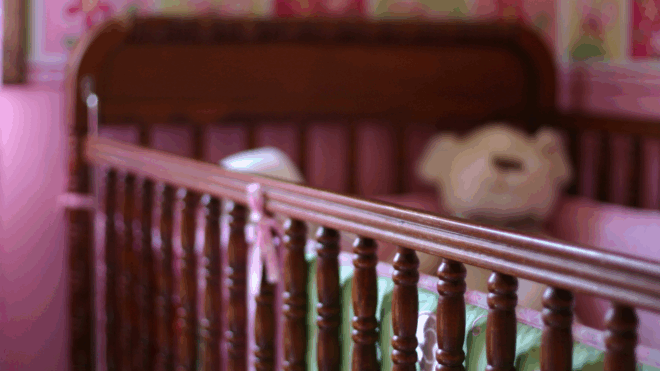








My hubby emailed me this last nite and I am sharing it with all of you.
By Jayne O'Donnell, USA TODAY
Bobby Cirigliano was 6 months old in 2004 when the side rail of his drop-side
crib came loose, he became trapped and suffocated between the mattress and
rail.
It seemed like an isolated, freak accident, his parents said, until theybegan
researching crib deaths.
"We were horrified to learn how many were before and how many came after
Bobby," says the infant's father, Robert Cirigliano. "The companies knew that
there were problems with these cribs, but there were never any warnings. They
brushed them under the table."
After recalling 10 million drop-side cribs since 2007 — including 2 million in
June alone — the Consumer Product Safety Commission proposed new crib standards
last month that will ban the sale of drop-side cribs and prohibit their use in
hotels and day care centers after it is finalized, likely in December. Faced
with a mounting death and injury toll and rising consumer fears, CPSC Chairman
Inez Tenenbaum moved to publish the crib rules this year, two years ahead of a
congressional mandate.
SAFETY TIPS: Routine checks of drop-side crib can ensure safety
KIDS' SAFETY: Trade group says companies take safety seriously
MORE INFORMATION: CPSC's crib information center
Under current federal safety rules that have been in effect for decades, if
products repeatedly break or otherwise malfunction, it's considered a defect.
Yet 14 crib companies amassed more than 900 incident reports about drop-side
cribs that were falling apart, injuring and killing infants before they
recalled the cribs, according to a USA TODAY analysis of CPSC data.
"You cannot blame people when time after time you see the product is not
working," Tenenbaum says.
Few safety hazards scare parents like a faulty crib, consumer advocates say.
After all, the crib is the only place parents are supposed to leave babies and
toddlers unattended, says crib safety advocate Jack Walsh.
Drop-side cribs, which have movable sides that make it easier to get babies in
and out, have been a mainstay of babies' rooms since at least the 1970s, thanks
largely to their back-saving design.
Many manufacturers switched from metal to cheaper plastic hardware and
less-expensive wood, which Tenenbaum and safety advocates say exacerbated
problems. Still, cribmakers largely stuck with their designs, sometimes
chalking up the complaints to consumers who assembled or used the cribs
improperly, as Stork Craft, Dorel and the Juvenile Products Manufacturers
Association publicly did.
At least 32 children died since 2000 because they were in drop-side cribs. An
additional 14 deaths were because of entrapment that could have been caused by
a drop-side, according to CPSC.
The hundreds of reports, involving manufacturers including Delta Enterprise,
Stork Craft, Dorel and the now-defunct Simplicity, paint a harrowing picture.
Crib rails, slats and attachment points broke, trapping the heads and feet of
hundreds of babies, according to the CPSC.
Simplicity, Stork Craft and Delta were three of the largest drop-side-crib
makers. Stork Craft said in a widely quoted statement in November that
consumers had assembled cribs incorrectly and used them with broken parts.
Rick Locker, JPMA's general counsel and an attorney at Locker Greenberg &
Brainin, says, "There's been an unjust demonization of drop-side cribs." He
says the problems largely occurred "simply because they have more moving
parts," along with "wear and tear and environmental issues over time."
Larger issue
But Alan Schoem, former director of CPSC's Office of Compliance and now a
senior vice president at Marsh Risk Consulting, says the problems with
drop-side cribs illustrate a larger issue manufacturers must consider.
"Companies have an obligation to design their products so that reasonably
foreseeable product use or misuse doesn't result in injury or death," says
Schoem. "If the same type of product use resulting in injury occurs a number of
times — even if the use originally was misuse — it certainly becomes
foreseeable."
Dorel, parent company of Cosco and Safety 1st, paid then-record civil penalties
of $1.75 million in 2001 for failing to notify CPSC of dozens of incident
reports, including many involving cribs that could be easily misassembled and
trap children.
Under CPSC rules, cribmakers could face civil or even criminal penalties for
failing to factor use or misuse into its designs or not reporting incidents to
the agency.
CPSC would not comment on whether any of the cribmakers are being investigated,
but spokesman Scott Wolfson notes, "The agency does not hesitate to use its
penalties powers if the evidence points to a violation of the federal reporting
requirements."
In January, Dorel Asia blamed an eerily similar issue to its earlier crib
problems on the Iowa parents of an infant who died in a Dorel drop-side crib. A
company press release noted, "Although tragic, it is important for consumers to
understand that the circumstances of this fatality were highly unusual," even
though at the time of the recall, Dorel had reports of 67 other incidents,
including eight in which children were trapped between the drop-side and the
mattress.
In its release, Dorel said that the crib was assembled using duct tape, that
the parents were arrested for "child endangerment" and that the father "had
additional drug charges." Dorel spokesman Rick Leckner declined to comment for
this story.
When the Dorel recall came up at a congressional hearing in January, JPMA
Executive Director Michael Dwyer brought up the criminal charges again, only to
learn from Rep. Bart Stupak, D-Mich., chairman of the House Energy and Commerce
oversight subcommittee, that they had been dropped.
"It is important that if there are manufacturers profiting from the sale of
these products, they take a good look in the mirror and do everything they can
to address the problem (and) not always blame the parents," scolded Rep. Bruce
Braley, D-Iowa.
Even if their own children aren't hurt, parents who own products that have
injured or killed other children still feel as though they are "victims," says
crisis communications expert Gene Grabowski, who has represented many product
manufacturers. If companies suggest parents may be misusing products, "The
natural reaction of those consumers is guilt and outrage," he says. "One of the
first rules of communicating in a crisis is to avoid blaming the victim," says
Grabowski, a senior vice president at Levick Strategic Communications.
Several safety advocates said pointing fingers back at customers has been an
unfortunate habit of the children's product trade group over the years.
JPMA "just slips into that because they are a trade association, and they have
to protect manufacturers," says Walsh, a consultant to the group Keeping Babies
Safe.
"They've got to do something about their image," he says. "They've got to
soften it."
Brenda Berg, who chairs the JPMA and is CEO of the children's product company
Scandinavian Child, says the "product can't always be to blame."
"Blaming the parents — it's a difficult call," says Berg. "But the industry has
to be careful about not placing blame (on parents)."
Berg, who became the JPMA chair in March, says, "I can't speak for anything
that was said in the past, but I do think that anything that gives an
appearance of defensiveness takes away from the fact that JPMA has worked for
decades to save lives and prevent injuries ..."
Products that are too difficult to assemble can also be considered defective.
"Inadequate assembling directions" are considered a defect, Tenenbaum says.
"Often times, because these are manufactured overseas, they will hire people in
China to write them in English," says Braley. "The syntax is completely
inappropriate to the intended user."
In recalls involving drop-side cribs sold by Simplicity and Stork Craft, the
hazard was related to the fact the sides could be installed upside down without
parents realizing there was a problem.
Tenenbaum says a friend's son, who is a Harvard graduate, found his child's
drop-side crib so confounding that he — like the parents of the Iowa child —
was considering using duct tape to keep it together. "If a crib had worked
well, you wouldn't need duct tape," Tenenbaum says.
CPSC says it "cannot say that every drop-side crib is hazardous" but notes that
its investigations show the cribs are "more prone to mechanical failure than
similar designed fixed-side cribs." Hardware on drop-side cribs is more prone
to problems during routine use, and the problem is worse with older cribs, CPSC
says.
Drop-side dangers
CPSC's explanation of drop-side dangers mirror the Ciriglianos' description of
what happened to their son. When drop-side hardware breaks or deforms, the
drop-side can detach in one or more corners of the crib. If an infant or
toddler moves into this space, the child can get trapped or wedged between the
crib mattress and drop-side and suffocate. Infants can also strangle in the "V"
shape formed by a drop-side that detaches in an upper corner.
Walsh, who called for drop-side cribs to be banned in 1990, says regulators and
cribmakers "have to go overboard" on safety with cribs because, between
babysitters, grandparents and parents, they "will be misused."
JPMA general counsel Locker cites CPSC data from early 2007 — before a CPSC
analysis found dozens of drop-side crib deaths — that shows crib deaths since
1973 were down 89%. And he notes far more infants are killed when they are
placed in bed with one or both parents. The non-profit group First Candle says
the risk of an infant dying is 40 times greater in an adult bed than it is in a
crib.
Still, Bill Kitzes, a former CPSC recall adviser and program manager, believes
babies deserve extra protection from unsafe products.
"Any time you're dealing with the infant population, which is unable to protect
itself and has no idea what a hazard is, the manufacturer has a higher
responsibility to make a reasonably safe product," says Kitzes, now a product
safety analyst who works with plaintiff lawyers, manufacturers and occasionally
defense lawyers.
Already a member? Click here to log in


Vent about any annoying relatives - and get honest feedback - in this no-holds-barred group.