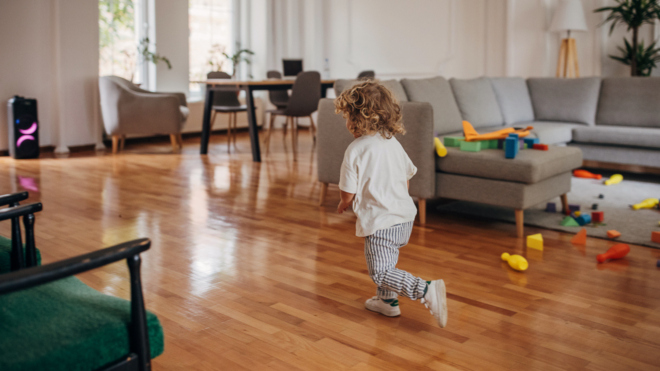







Walk, stop running, be careful, listen, stay in bed, sit and eat, talk quietly, pay attention, focus, what did I tell you? All day long and for many years I have repeated these words to my son James who is now six.
People told me to quiet him down and make him stop running. "If you can think of a way, let me know" I'd answer. They didn't understand that although I reprimanded James, it did little good. I'm certain they doubted my parenting skills. Others thought James had a hearing problem.
There was no speed control when James' motor started running. Most holidays were spent watching James run around in circles, yelling. I fretted about how he would behave at parties, dinners, and church. I worried that James was hearing too many negative comments about himself. It was hard to catch him doing something good.
James wasn't learning like my daughter had. He did not remember the letters I taught him. His fine motor skills were poor. He was five and could not sing the alphabet song. "Boys learn slower than girls" people would say.
I hoped that James would outgrow all these things. Instead he got worse. While all the other children kicked the ball at soccer, James stood at the other end of the field looking at the sky, conversing with players as they ran by. Once he ran up to a boy on the side line and pushed him for no reason.
His behavior was awful at church. One time he did a somersault on the altar. I'm sure the priest hadn't seen that before! Ashamed, I tried to make him walk back to our pew. "Stop running" I said, squeezing his hand. "I want to stop mommy, but I can't" he replied. I cried, knowing he was right. He was not in control of his own body.
Other times he placed himself in danger because of his impulsivity. I was constantly worried that he would bolt in front of a car in the parking lot or run off in a store.
I began to fight with my husband about the possibility of needing medication in the future. "He isn't going to learn or have friends," I told him. I was depressed and stressed out. I spent Thanksgiving of 2007 in the bathroom crying. I made an appointment with my doctor to see about getting medication for myself because the chaos was taking its toll on my own mental health.
In the meantime I heard that red dye 40 caused hyperactivity. I removed it from his diet. I didn't think it would work, but I tried it anyway. This step eliminated the strawberry milk he was drinking two times a day. After two weeks I noticed a change. Maybe I would not need medication, and I hoped James would not either.
One trip to the doctor's office, and one green lollipop later, and I knew all artificial colors were bad for James. He ate the pop in the waiting room and twenty minutes later he was like a rabid squirrel in a phone booth. I didn't think I would be physically able to get him into my car.
I was encouraged and started to do research on the Internet. I asked around for information on ADHD and diet. Finally I found the Feingold organization. I had so much more to learn, but joining the knowledgeable and supportive Feingold organization made it easy.
From them I learned that James couldn't tolerate artificial colors, preservatives and flavors. I changed our home and personal products such as dish soap and toothpaste. I monitored James reaction to natural salycitates. I found the natural salicylates particularly interesting, because prior to Feingold I had noticed that he reacted to apples.
James has adjusted to his diet. He understands that he can only eat certain foods. He does not complain when I bring additive free foods to parties. At Halloween he looks forward to trading in his candy for a toy. At Christmas Santa brings all natural candy. I send acceptable treats in to school. Grandparents and family see the diet working and ask what they can give him.
James has gone from being a 10 on my hyper scale to being a typical active 6 -year- old boy. He is learning how to read and do math. He has no problems falling asleep. He talks with a regular volume and tone. He says "thank you, I love you," and hugs me more. He answers me when I speak to him and follows directions. I laugh when I have to ask him to walk faster. He even sits in church and plays soccer. The best evidence of his change is that one family member thought we had medicated him. Our biggest compliment is that his teacher has put her own son on the Feingold diet.
I am grateful to James for making me think about the foods that fuel our bodies. I am certain there are unseen health benefits for our entire family, and have already discovered that my daughter's migraines were a result of eating artificial vanillin.
Each Thanksgiving, when I sit back and reflect on what I am thankful for, I will always remember the year I found Feingold.
--------------------------------------------------------------------------------------------------------------------------------------
WHY DO I PREFER FEINGOLD OVER OTHER DIETS?
If you're going to use diet as part of your treatment you need to do it right.
This means you need to have a systematic way of testing your child's diet. Most children will benefit from a diet that removes artificial colors, flavors and perservatives. Some members, like me, find they need to go a little further. My son, through an elimination test, was found to have issues with too many apples and oranges. About 6 months into the program we went gluten free as well.
Doris Rapp, who is well known for her elimination diet book once gave an example of a person limping because they have 5 nails in their shoe. If they remove 3 nails they are still going to walk with a limp.
So if you are allergic to all dyes, but only remove red. If you are sensitive to chemicals, but only remove them from your food...... If you take out only artificials, but you also have a problem with gluten.....you will still show the offending behaviors and symptoms.
The feingold program is a test to find out what might be triggering your problems.
If you don't find all your child's big triggers, you're not going to see results. This means you need support and practical information to figure out what these triggers are.
Unfortunately foods have hidden ingredients that are not listed on labels. Many children react to even the smallest amount of artificials and the reaction can last for more than one day. For example my son ran across my kitchen cabinets like a little rodent after he ate white pancakes that had a small amount of red dye in them.
I read several books before joining Feingold. The books told me what not to eat, but they didn't tell me exactly what to eat. I was left to do alot of label reading on my own, and unless you buy organic or eat only homemade foods, you aren't going to have an effective diet.
The books would explain how going gluten free benefits some . But, how do I know if I should go gluten free? Where do I buy gluten free products? What are some gluten free recipes? What do I pack in my child's lunch? Which ketchup, ice cream etc. are gluten free?
Members of Feingold get a food book that tells you what name brand products are completely clean of artificials. It does take a little time to figure out how to do your new shopping, but the results can make it more than worth while. It just becomes a matter of buying this cracker instead of that cracker. These chips instead of those chips.
The Feingold program also includes swapping out household and personal products. They give medication in a patch, so why wouldn't the petroleum in laundry detergent effect your child in the same way the petroleum in artificial colors does? You'll learn name brands of detergents, shampoos etc. that are healthier. Some folks share their homemade cleaning solution recipes. I actually save money on cleaning products now.
Members of Feingold have access to a member bulletin board. This is a place where members can ask questions, problem solve together and support one another. This is invaluable to me. The tips you learn on the bulletin board are what makes implementing the diet easier and more effective. The tips I learned there are what taught my son how to accept and follow his diet. You learn how to navigate birthday parties and difficult relatives. Have a question, someone has an answer.
If you are concerned about saving money and sticking to the program the bulletin board will provide answers. Several members are single moms who use WIC. It can be done.
There are other reasons why I prefer Feingold, but the food book and the bulletin board are the top two reasons. Well, that and the fact that our chances of getting cancer have been greatly decreased.
Here is a link to the website which shares other moms stories. http://www.feingold.org/pg-success.html
Many do not realize the Feingold organization is a non profit organziation. There is no one at the top making the big bucks. They rely on a few paid staff and volunteers who get paid with the satisfaction of helping others.
Thanks for listening.
The Feingold program removes artificial ingredients from home and personal products. You get a book that tells you exactly what brands of food to buy. They research for hidden ingredients. For example BHT can be hidden in vitamin A palpitate. Even cheerios sprays it's packaging with BHT. I know what I can get at BJ's, Walmart, CVS and my usual grocery. You learn to buy things like fritos instead of cheetos for example. Actually you can buy all natural cheetos too!
I don't find the diet restrictive. It has been mostly a matter of changing brands. My son is terrific about it. After the first couple weeks it gets easier.
There are a few single moms there with children on WIC. They are able to figure out how to stick to the diet and manage their budget. It is more difficult for them, but they figure it out and are rewarded by the results.
The Feingold Program can also help Autism, aspergers, ocd, ppd, learning, behavior, and other health problems. It is for both children and adults.
Jane Hersey the Feingold director has written a good book, "Why can't my child behave". You could ask your library to buy it or get it on amazon if you want to learn more without joining.
Tags: feingold, add, adhd, hyperactivity, add diet
Hi there! Thank you for writing this journal i found you through a comment in ADHD and US... I have a 7 y/o son wel 8 in august and this is his second school yr on meds. My son has alot of impulsivity and focus issues. He is active but not uncontrollable..the dr's put him on meds and we had a horrible exsperience and my husband and i took him off an went all natural, he soon grew out of the dose or started hiding the suppliment becausehe didn't like the taste..So we are back on a low dose..15mg patch and he seems to like it. He also takes 10mg or tenex at night to sleep because he cannot sleep at night. i have beenconsidring homeschol alhough i hate to do that because he is a social butterfly he loves everyone, he doesn't have a mean bone in his body he is not violent in any way..thank god we consider ourselves very lucky.
I am going to run out and get this book and try it over the summer, if it works for us i will be on top of the world..I would rather put that 60$ i spend on meds towards groceriers if i have to go a certain diet way....This could be a god send for us! Thank you again for this journal your excitement and results with your son who sounds amazingly similar to my son have convinced me to try it and get the book. thank you !
I just noticed you are in MA i live in ME!!!
Certainly mainstream science and medication can help our children. But it can also hurt them.
If you want to argue diet treatments you should use a study based on diet and not behavior modification.
There is plenty of research supporting diet.
Here are some studies and the success rate of each. (These are studies published in peer-review medical journals.) Egger 1983 - 93%Egger 1985 - 82%Rowe 1988 - 73%Kaplan 1989 - 58%Carter 1993 - 76%Boris 1994 - 73%Rowe 1994 - 75%Pelsser 2002 - 81%
The south hampton study which was published in the well respected medical journal The Lancet has been received credit from the American Academy of Pediatrics. See my other journal post. It has prompted British food producers to remove certain artficial ingredients from their European foods. I doubt companies would go through the expense of doing this for no reason.
There are other studies that show lower success rates. You would need to address each one individually. Many studies use enough dye to color a tea spoon of frosting. The average american child gets many times more artificial color than that.
You also need to consider when the child was observed after eating the food. Was it within minutes, a few hours later, the next day? It should be all of the above, and it usually is not.
You also need to consider who funded the study.
Diet is about removing a complex mixture of chemicals. Studies concentrate on a select few.
Lastly there are natural foods that also cause problems.
All the resources you have given would have led my son needlesly to medication. I'm not saying medication is not valuable, because it is. All I am saying is it is possible that you don't need it, you need less of it, or it works better in combination with diet.
A year ago I would have agreed with you and thought diet was insane. Now I know diffrently. I have spent my entire life putting doctors on pedistals. I believed anything they told me. Now my eyes have been open wide. I use them and need them, but I am going to go home and do some research before I agree to anything. Much of my research will include homeopathic remedies, and if they aren't harmful I'll try them.
My son's diet works just as well if not better than medication. He's not going to be on the streets committing crimes and doing drugs because he is untreated. He is treated.
I understand that there are those who will subscribe to diet and those that never will. I'm just here to share my experience to those who are interested and those who do not know about diet. I feel like it was a miracle I ever even heard about diet. It is important to me to get the word out to others.
I appreciate that you spent time writing a thoughtful response. I am certain that you feel as passionate about your treatment as I do mine. I think there is room here for both opinions.
i was happy to hear from you through a response you made to a post of mine on an adhd group. both my boys have adhd and have different degrees of trouble in different areas. i have heard of the feingold diet but have been reluctant to join because of the price and not really knowing if it worked. its nice to hear from someone that has used the program with such remarkable results. i have add also. i cant help but put myself in the place of my children because i know what it feels like to have add or adhd. i think that medication, in some situations, is unavoidable. now saying that i understand that diet and structure at home and school are very important also. the thing with add/adhd is that it goes beyond just lack of focus and inattentiveness. it affects the entire way the children respond and react to others. it affects the way a child learns to deal with other people and their own self worth and self esteem. it affects the way a child feels about themselves. if a child feels that they are always the one left out or that other kids never want to play with them because of the way they act or react to different situations, it can damage them and make relationships of any kind more difficult as teenagers or adults. if a medication can help a child feel more normal and secure in themselves then i think it is a no brainer. i am struggling now with the decision to medicate my children and even though i don't really want to medicate them, knowing the side effects first hand, i don't ever want them to feel left out or different if they don't have to be. this is a disorder that can hinder their abilitly to learn or retain. any other such disorder would be treated without question. besides, with a combination of diet and medication, maybe my own symptoms of adult add will be alleviated a little. that could help everyone in my house i suppose:) i guess the point of this is that every child is different, and regardless of your stance on medication or diet, give your child the best chance you can give them at all around success.
Click here to register for CafeMom
Already a member?Click here to log in
CafeMom is a community where thousands of moms come together every day. Why join?
myheartsjelg Apr. 4, 2008 at 4:04 PM